
Care Guides
Dementia Care at Home: A Practical Guide for Families
Golden Hour Home Care Agency · July 5, 2026 · 7 min read
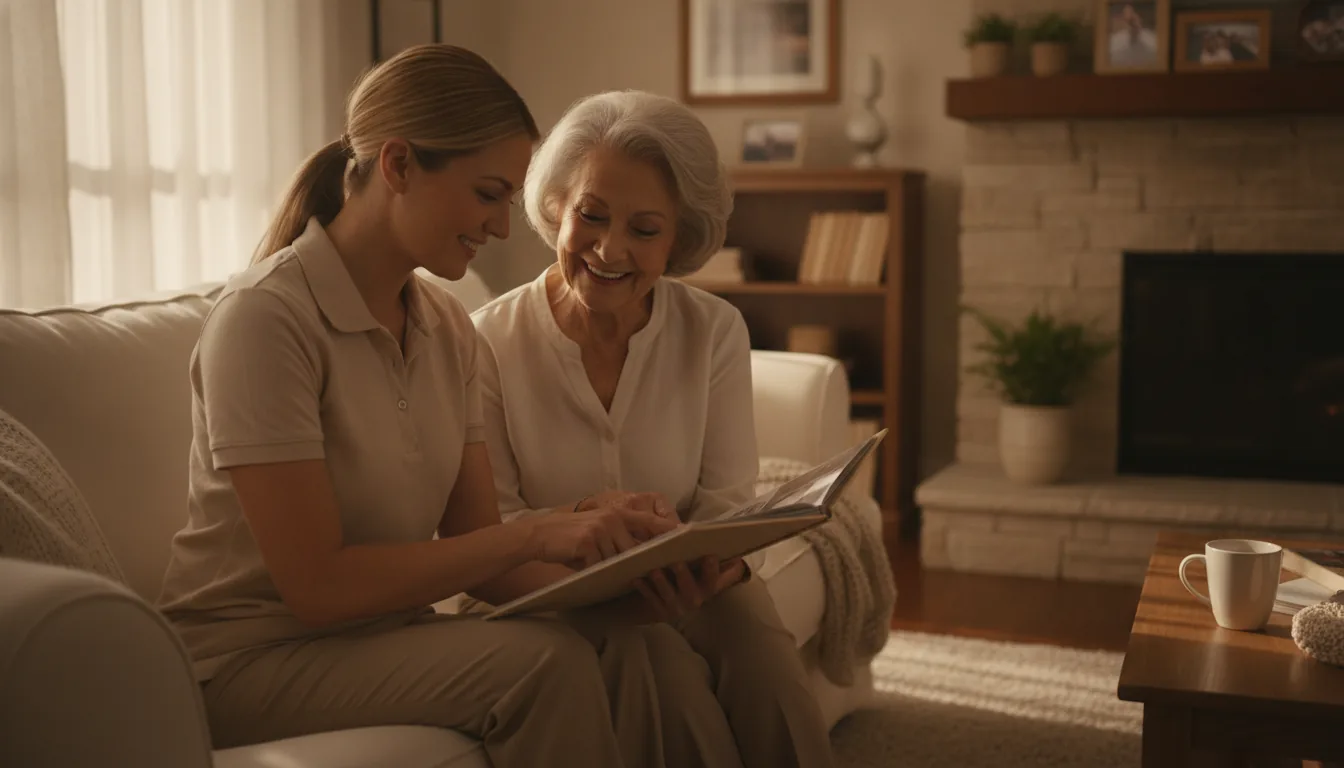
Most families can manage dementia care at home, often for years, with the right setup. That means a safer house, a predictable daily routine, and regular breaks so the main caregiver doesn't burn out. Non-medical home care fills the gaps with supervision, companionship, and hands-on help, while your parent's doctor handles the medical side.
If your mom or dad was recently diagnosed, or the diagnosis happened a while ago and things are getting harder, you're in good company. According to the Alzheimer's Association's 2025 Facts and Figures report, 7.2 million Americans age 65 and older are living with Alzheimer's. Behind almost every one of them is a family figuring this out day by day, including thousands of families right here in Dauphin, Cumberland, and Lebanon counties.
This guide sticks to the practical side: the home, the routine, the hard moments, and where to get help. For anything medical, your parent's doctor is the right call, and we'll flag those moments as we go.
What does dementia care at home actually involve?
Day to day, dementia care is less about the diagnosis and more about ordinary life getting harder. Your dad forgets whether he ate lunch. Your mom asks the same question six times in an hour, or gets anxious when the sun goes down.
The work falls into a few buckets: keeping the home safe, keeping the day structured, helping with personal care as it becomes needed, and watching for changes worth reporting to the doctor. None of it requires a nursing degree. It does require patience, backup, and a plan.
One thing to settle early: you can't do this solo forever, and you were never supposed to. Build your support bench now, while things are stable, not in a crisis.
How do I make the home safer for someone with dementia?
You don't need to renovate. A weekend of small changes handles most of the risk. Walk through the house and look for these:
- Falls. Remove loose rugs and clutter from walkways. Add night lights between the bedroom and bathroom. Grab bars in the shower and near the toilet are cheap and worth it.
- The kitchen. Consider stove knob covers or an automatic shut-off device. Move sharp knives and cleaning chemicals somewhere less obvious.
- Wandering. A simple chime or bell on exterior doors tells you when a door opens. Keep a recent photo of your parent on your phone, and let a trusted neighbor know about the diagnosis.
- Medications. Lock up or put away anything your parent could double-dose. A caregiver or family member can give medication reminders, but the pillbox setup itself should be simple and supervised.
- Bathroom. A shower chair and handheld sprayer make bathing safer and calmer for everyone.
Do the changes gradually if you can. A house that suddenly looks different can be disorienting for someone with memory loss.
Why does routine matter so much?
For a person with dementia, the world gets less predictable from the inside. A steady routine puts some predictability back.
Try to anchor the same things at the same times: wake up, meals, a walk, quiet time, bed. Schedule the demanding stuff, like bathing or appointments, for the time of day your parent is sharpest. For many people that's mid-morning.
Keep activities simple and familiar rather than new and stimulating. Folding towels, sorting a coin jar, listening to music from their younger years, sitting on the porch. The goal isn't productivity. It's calm, plus the feeling of being useful, which doesn't go away with a diagnosis.
When a professional caregiver joins the picture, the routine is the first thing they should learn. At Golden Hour, the care plan we build after the free in-home consultation is written around your parent's existing rhythms, not the other way around.
How do I handle repetition, agitation, and sundowning?
These are the moments that wear families down, so let's get concrete.
Repeated questions. Answer calmly, the same way, every time. Your parent isn't testing you; each time is the first time for them. If "when is lunch?" comes every ten minutes, a visible cue like a whiteboard with today's plan can absorb some of the asking.
Agitation. Don't argue facts, and don't correct for the sake of correcting. If dad insists he needs to get to work, arguing that he retired in 2009 usually makes things worse. Respond to the feeling instead: "Sounds like you've got a lot to do today. Let's have coffee first." Then redirect to something familiar.
Sundowning. Late-afternoon restlessness and confusion are common. Keep afternoons low-key, close the curtains before dusk so windows don't turn into dark mirrors, turn on lights early, and skip caffeine after lunch. If evenings are the hardest stretch, that's a smart window to schedule in-home care hours so you're not managing the toughest part of the day alone.
If agitation becomes intense, or your parent seems suddenly much more confused than their normal baseline, call the doctor. A fast change is a medical question, not a caregiving-technique question.
When should I call the doctor?
A clear line helps: family and non-medical caregivers handle daily life; the doctor handles anything clinical. Reach out to the doctor's office when you notice a sudden change in confusion or alertness, a fall, new problems with swallowing or walking, signs of pain or illness, or questions about medications. Write down what you observed and when. Those notes are gold at appointments.
For everything in between, the Alzheimer's Association runs a free 24/7 Helpline at 800-272-3900, staffed around the clock by specialists and master's-level clinicians. It's a genuinely useful resource at 2 a.m. when something's wrong but not doctor-worthy, and it's confidential.
What about you? The caregiver matters too
Here's the stat worth sitting with: in that same 2025 report, 59% of dementia caregivers reported high to very high emotional stress. Dementia caregiving is a long road, and running yourself into the ground helps nobody, least of all your parent.
Watch for your own warning signs: short temper, poor sleep, dropping things you used to enjoy, dreading the phone. These mean you need more support, not that you're failing.
Respite care exists exactly for this. A trained caregiver steps in for an afternoon, a day, or a week while you rest, travel, or just live your own life. We've written a full guide on it: What Is Respite Care? A Guide for Family Caregivers. If cost is the worry, Pennsylvania has programs that may help; see How to Pay for Home Care in Pennsylvania.
How can non-medical home care help with dementia?
A dementia-trained caregiver in the home takes real weight off the family. At Golden Hour, that looks like:
- Companionship and supervision, so your parent isn't alone during risky hours
- Personal care: bathing, dressing, grooming, toileting, handled with patience and dignity
- Meal preparation and gentle prompting to eat and drink
- Light housekeeping so the home stays safe and manageable
- Medication reminders at the right times (reminders only; we don't administer or manage medications)
- Respite and overnight care so family caregivers can sleep and recharge
To be clear about what we are: Golden Hour Home Care is a non-medical agency. We don't diagnose, treat, or manage dementia medically. We provide the trained, background-checked daily support that lets your parent live safely at home while the doctor directs the medical care. You can see the full list on our services page.
Our caregivers serve families across Harrisburg and Dauphin County, Cumberland County, and Lebanon County, seven days a week, including evenings and holidays. That evening availability matters more with dementia than with almost any other kind of care, because sundowning doesn't keep business hours.
One more thing. If your parent doesn't think they need help, that's normal and workable. We wrote a separate guide on that conversation: How to Talk to Your Aging Parent About Accepting Help.
You don't have to map the whole road today. Most families start small: a safer house this weekend, a steadier routine next week, a few hours of help after that. Golden Hour Home Care offers a free in-home assessment across Dauphin, Cumberland, and Lebanon counties. We'll walk the home with you, talk through the routine, and build a personalized care plan with no obligation. Call (717) 219-8542 or reach out online. We're available 7 days a week, including evenings and holidays.
Frequently asked questions
Can a person with dementia stay at home?
Often, yes, especially in the early and middle stages. Familiar surroundings tend to reduce confusion and anxiety. What makes it work is a safer home setup, a steady routine, and enough support that the family caregiver isn't doing everything alone. As needs grow, families usually add in-home care hours rather than moving straight to a facility.
What's the difference between in-home dementia care and memory care?
In-home dementia care brings a trained caregiver into your parent's own house for companionship, supervision, personal care, and help with daily tasks. Memory care is a secured residential facility with 24-hour staff. Home care keeps your parent in familiar surroundings and lets you scale hours up or down. Memory care becomes the conversation when safety can't be managed at home anymore.
Does Golden Hour provide medical treatment for dementia?
No. Golden Hour Home Care is a non-medical agency. Our caregivers provide companionship, supervision, personal care, meal preparation, medication reminders, and respite for family caregivers. Diagnosis, medication management, and treatment decisions stay with your parent's doctor. We work alongside the medical team, not in place of it.
How many hours of dementia care at home do we need?
It depends on the stage and on how much family is nearby. Many Central PA families start with a few hours a few days a week, often covering the late afternoon when sundowning hits, then add hours as needs change. A free in-home consultation is the easiest way to get a realistic starting number for your situation.